WELCOME TO THE DIGITAL PUBLIC GOOD ALLIANCE

We are unlocking the potential of open-source technologies for a more equitable world

The DPGA relies on engagement and leadership from countries, private sector technology experts, think tanks, governments, philanthropic donors, international implementing organisations, and the UN to create a thriving global ecosystem for digital public goods

What We Do

Our Key Initiatives & Focus Areas

As a members-based alliance we bring together creators, implementers, and supporters working towards a shared global vision for DPGs

51

DPGA Members Logo

Members

The DPGA relies on engagement and leadership from a broad membership and stakeholder community. We use a Roadmap as a coordination, alignment, engagement, and communication tool to capture the activities of DPGA members working to significantly advance the four DPGA strategic objectives described in the 5 year strategy.

Explore our Members

226

DPGA Members Logo

Digital Public Goods

According to the UN Secretary General's Roadmap for Digital Cooperation, digital public goods are open-source software, open standards, open data, open AI systems, and open content collections that adhere to privacy and other applicable laws and best practices, do no harm, and help attain the Sustainable Development Goals (SDGs).

Explore the DPG Registry
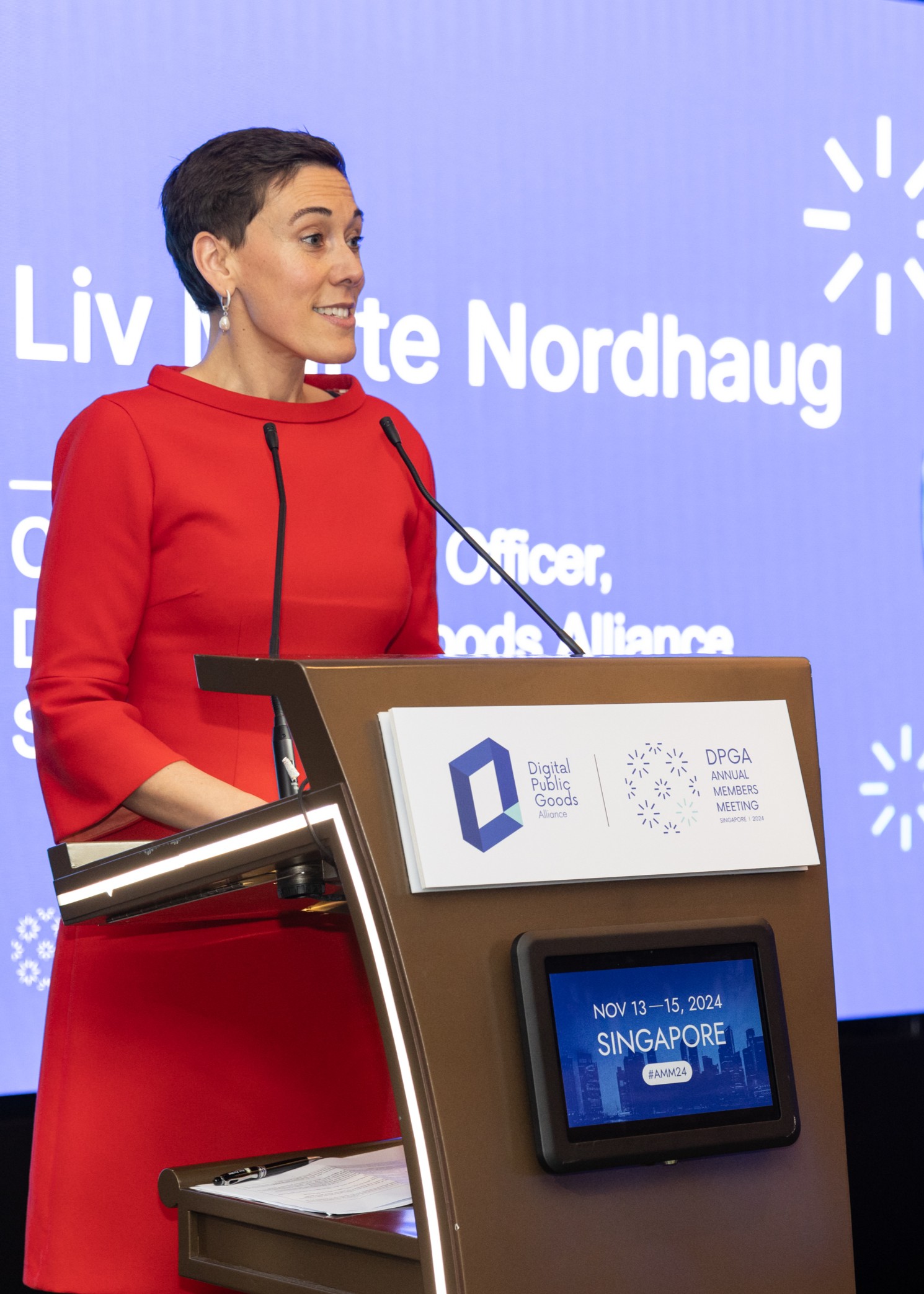
Vision Illustration - Liv Marte Nordhaug at AMM 2024
The Vision

"By the year 2030, the collaborative efforts of the strong multi-stakeholder Digital Public Goods Alliance have unlocked the potential of digital public goods to contribute to a more equitable world and accelerate attainment of the Sustainable Development Goals."

Source: Digital Public Goods Alliance 5 Year Strategy

Written by: Liv Marte Nordhaug and Lucy Harris Co-Leads of the DPGA Secretariat

Why We Do It

How DPGs Improve Everyday lives?

We're driven by a vision of a better world and the belief that collective action can create meaningful change.

Drive entrepreneurship and local innovation, particularly among young people.

Strengthen women's economic power in societies.

Strengthen agricultural outputs for farmers.

Support small scale producers.

Reduce food insecurity via cash transfers and subsidies.

Increase financial inclusion by enabling digital payments.

Improve healthcare management systems.

Featured News

Stay informed with our latest news, insights, and stories

Latest news from us, our members and DPG owners, here can be external news, events also
Leveraging DPGs for Rapid Response to Urgent Global Challenges

December 15, 2025

Leveraging DPGs for Rapid Response to Urgent Global Challenges

The global development landscape is facing a dual crisis. On one hand, we are witnessing a rise in Urgent Global Challenges (UGCs)—events that exceed routine disaster response capacities, frequently cross borders, and require coordinated international action. On the other hand, the resources available to meet these challenges had been shrinking, with global aid budgets having declined by up to 17% in 2025.This raises a central strategic question: How can institutions ensure that digital systems can be mobilised rapidly and effectively when the next major shock occurs?The DPGA Strategy 2023–2028 identifies a clear objective: by 2028, digital public goods (DPGs) should form a default component of the international community’s approach to preventing and responding to UGCs. Target 4 outlines the development of a global methodology for rapidly establishing communities of practice, as well as financing mechanisms to support relevant DPGs.At the DPGA Annual Members Meeting (AMM25) in Brasília, policymakers, practitioners, and technologists met to translate this objective into a concrete trajectory for 2026.Defining the Scope: Readiness for ResponseWhile mitigation and long-term recovery remain essential, discussions at the AMM25 underscored that the distinctive contribution of DPGs lies in rapid operational activation. UGCs are characterised by urgent timelines, uncertainty, and the need for coordinated digital action across institutions and borders. For this reason, the emerging focus is on scalable process models—structured methodologies that enable governments and partners to deploy and adapt digital tools quickly and systematically.It also became clear that rapid response is a cross-cutting theme that interacts with broader digital and governance ecosystems. Crises often generate significant pressures in areas such as:Information pollution, where inaccurate or misleading information disrupts coordination and decision-making;Digital public infrastructure (DPI), where foundational systems such as identity, payments, and registries must remain functional under degraded conditions or elevated demand;Climate-related events, which increasingly require real-time data, interoperable systems, and rapid mobilisation of sector-specific tools.These intersections demonstrate that readiness for response is not a discrete domain but an integral component of multiple DPGA workstreams.Participants also identified key vulnerabilities that frequently arise in crisis contexts, helping to clarify where process models must provide operational guidance:Delays or barriers in data sharing, often linked to unclear legal frameworks or governance arrangements;Connectivity disruptions, reinforcing the need for offline capability and low-bandwidth optimisation;Insufficient local implementation capacity, leading to reliance on external actors during periods when local expertise is most needed;Fragmentation among digital systems, where tools exist but lack validated workflows, integration pathways, or predefined institutional responsibilities.Given the evolving nature of UGCs and the variation in country contexts, this scope will remain an ongoing discussion within the DPGA community.Evidence on DPG Value: Rapid Adaptation and ResilienceAt the AMM25, experts presented concrete examples demonstrating how DPGs have supported rapid response in practice. Two attributes were repeatedly highlighted: Rapid adaptation and resilience.1. Rapid Adaptation and Repurposing During COVID-19, the ability of open-source platforms to be reconfigured on short timelines proved critical. Pamod Amarakoon (Director HISP Sri Lanka) described how DHIS2 was adapted to support a port-of-entry tracking system within days. This reflects broader research showing that open and modular systems enable unplanned yet essential adaptations during emergencies.2. Resilience: Stable and Scalable Infrastructure Emily Bennett, Head of Digital Public Solutions at UNICC, highlighted the importance of robust and secure digital infrastructure to maintain continuity of operations under crisis conditions. Building on this, she also noted that tools deployed in emergency contexts can continue to deliver value well beyond the crisis itself. She pointed to UNICC’s experience deploying iReport in eight countries, initially designed for short-term use around critical events, but later institutionalised by several governments once its broader usefulness became clear. This experience highlights the importance of considering post-emergency sustainability and long-term operational use when deploying DPGs for crisis response. Likewise, Zhongxin Chen, Senior IT Officer, D4I Lead at FAO) demonstrated how the organisation’s digital infrastructure for agrifood systems - FAO Agro-informatics Platform (FAIP) supports emergency agricultural and food security operations, pointing to the sectoral breadth of DPG relevance.Insights from Brasília: The "Status Quo" MapFollowing the expert panel, workshop participants engaged in a co-design exercise. The resulting "status quo" maps highlighted several persistent challenges:Technology: Offline capability remains essential for disaster resilience, and participants underscored the importance of low-code/no-code approaches to support rapid local adaptation.Governance: In many countries,legal frameworks to support interoperability and cross-border data sharing are still absent. Internal governance structures for emergency data use are also frequently underdeveloped.Support and Capacity: Discussions highlighted limited availability of local implementer networks and a continued reliance on external consultants, both of which hinder rapid deployment and long-term sustainability.The Way Ahead: Ideas for Strengthening ReadinessDuring the discussions, participants put forward several possible ideas for how readiness could be strengthened, without treating any of them as settled solutions. One idea was to create a shared, pre-crisis environment where different digital public goods could be set up quickly, tested together, and run through realistic emergency scenarios to surface gaps and improve how systems work together before a real shock occurs. Another idea focused on people rather than systems, suggesting more structured ways to build local technical capacity so that technologists on the ground are better prepared to deploy, adapt, and maintain digital tools under crisis conditions. A third idea addressed institutional bottlenecks, pointing to the value of having practical legal and procedural resources prepared in advance—such as guidance on procurement, data sharing, and decision-making—to reduce delays when governments and partners need to act quickly. These ideas were discussed as part of a broader set of options, with the understanding that further exploration and refinement will be needed as the work continues. Strengthening readiness for response will require continued collaboration, evidence, and alignment across sectors and regions. The ideas emerging from Brasília offer a concrete foundation, but their impact will depend on the engagement of a broader community of partners. We invite stakeholders to help shape and advance this work as the DPGA refines its 2026 agenda. For questions or to get involved, please contact Max Kintisch, Director of Research & Urgent Global Challenges of the DPGA Secretariat, at max@digitalpublicgoods.net.

Author: Max Kintisch, Director of Research & Urgent Global Challenges, DPGA Secretariat

Reflections from the 2025 Annual Members Meeting in Brasília

December 1, 2025

Reflections from the 2025 Annual Members Meeting in Brasília

Author: Lucy Harris, Chief Operating Officer, and Carol Matos, Senior Communications and Marketing Coordinator, DPGA Secretariat

Co-Develop Joins the Digital Public Goods Alliance

November 26, 2025

Co-Develop Joins the Digital Public Goods Alliance

The Digital Public Goods Alliance is pleased to welcome Co-Develop as its newest member, marking a step forward in advancing safe, inclusive, and interoperable digital public infrastructure (DPI) globally. Announced during the DPGA Annual Members Meeting in Brasília, Brazil, Co-Develop’s membership strengthens the global movement to scale digital public goods as critical foundations for equitable digital transformation.As part of the DPGA’s 2025 Roadmap, Co-Develop will focus on four key work streams:Accelerating DPG adoption at country level with targeted support for a variety of solutions including MOSIP, Mojaloop, Mifos, OpenCRVS, OpenFn, OpenSPP, and DIGIT.Championing the DPI Safeguards Framework by supporting the development and implementation of comprehensive policy safeguards that address governance, design, deployment, and use of DPI.Co-leading the 50-in-5 campaign alongside the Digital Public Goods Alliance by engaging countries, organising peer learning exchanges, and providing support to 50 countries seeking to deploy safe, inclusive, and interoperable DPI by 2028.Expanding domain-specific DPG solutions by identifying and supporting DPGs relevant to DPI that address sector-specific challenges in agriculture, climate, and health."Digital public goods play a critical role for countries seeking a robust and rapid approach to deploying digital public infrastructure", said Tim Wood, Chief Partnerships Officer at Co-Develop. "By joining the DPGA, we are emphasizing Co-Develop’s commitment to help counties identify pathways to leapfrog traditional development trajectories using proven, open-source technologies."“Co-Develop’s membership to the DPGA will significantly strengthen the use and understanding of digital public goods for digital public infrastructure. Their co-coordination of the 50-in-5 campaign, deep country engagement, and commitment to safe, inclusive, and interoperable digital public infrastructure directly advances our shared mission to empower governments with DPGs they can trust and adapt to meet their contextual needs.” Liv Marte Nordhaug, CEO, DPGA Secretariat.To learn more about Co-Develop joining the DPGA, visit their blog.To learn more about the activities they will be undertaking as part of their DPGA membership, visit the Roadmap.

Author: DPGA Secretariat

Join us and be a part of our impactful journey!

The Digital Public Goods Alliance seeks engagement and support from governments, businesses, civil society, technologists, donors, and industry experts.

Only by working together can we make this happen.

Subscribe to our monthly newsletter today!

* We don't spam and you can unsubscribe any time.